portf0lio

Connecting systems thinking and stakeholders through design to help sustainability transitions scale
Macramé Catenary Structures Under Tension: Analogue Fabrication and Digital Form-Finding
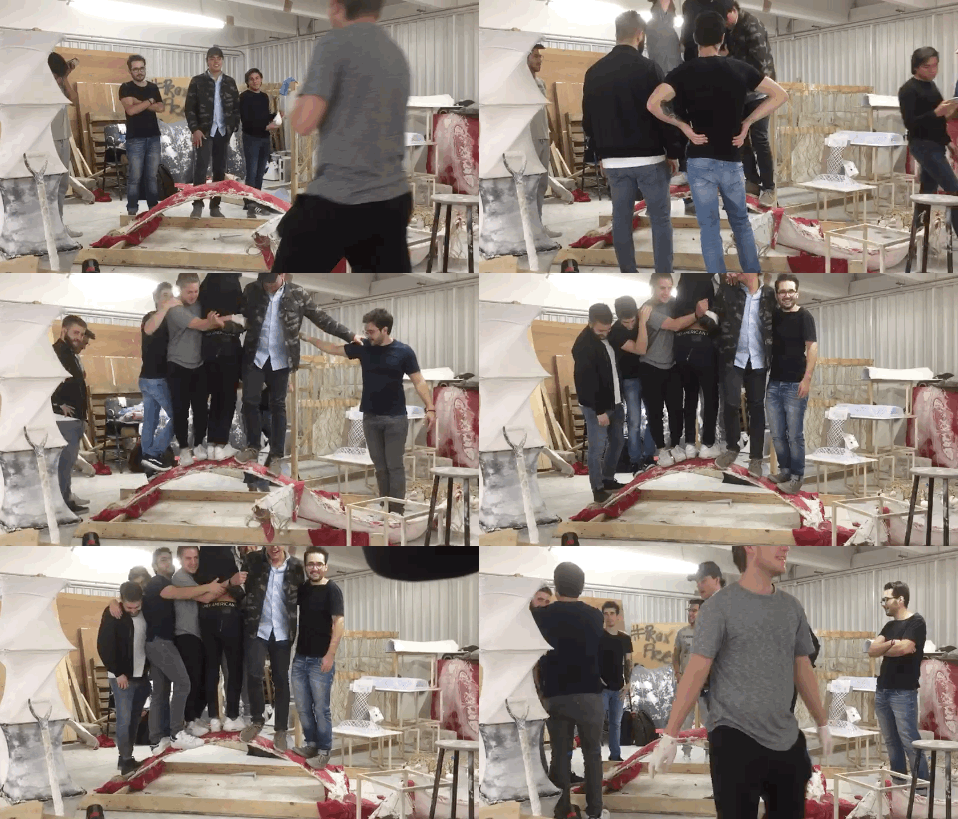
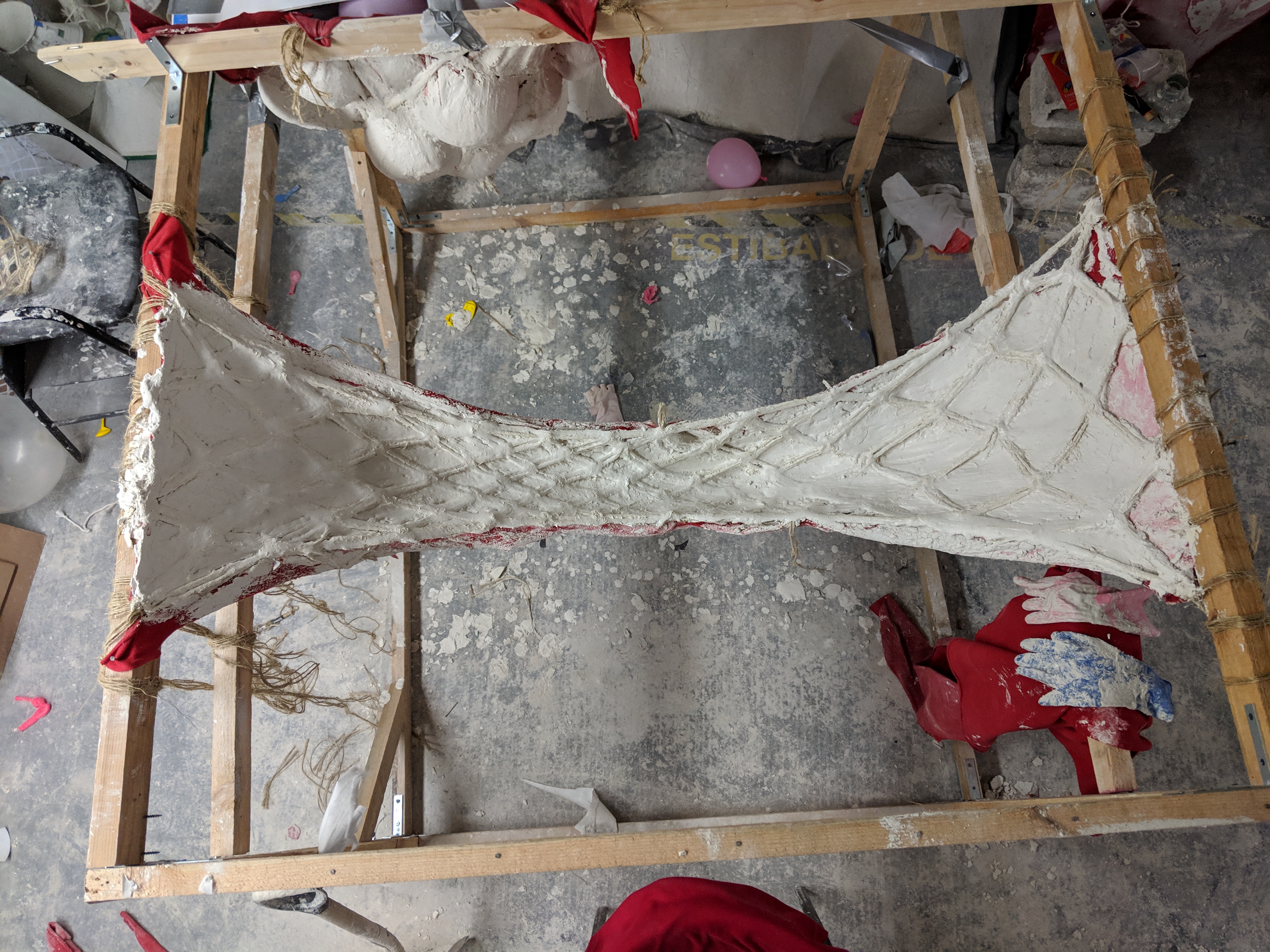
The research culminated in a 15kg woven structure that passed a load test of over 500kg.
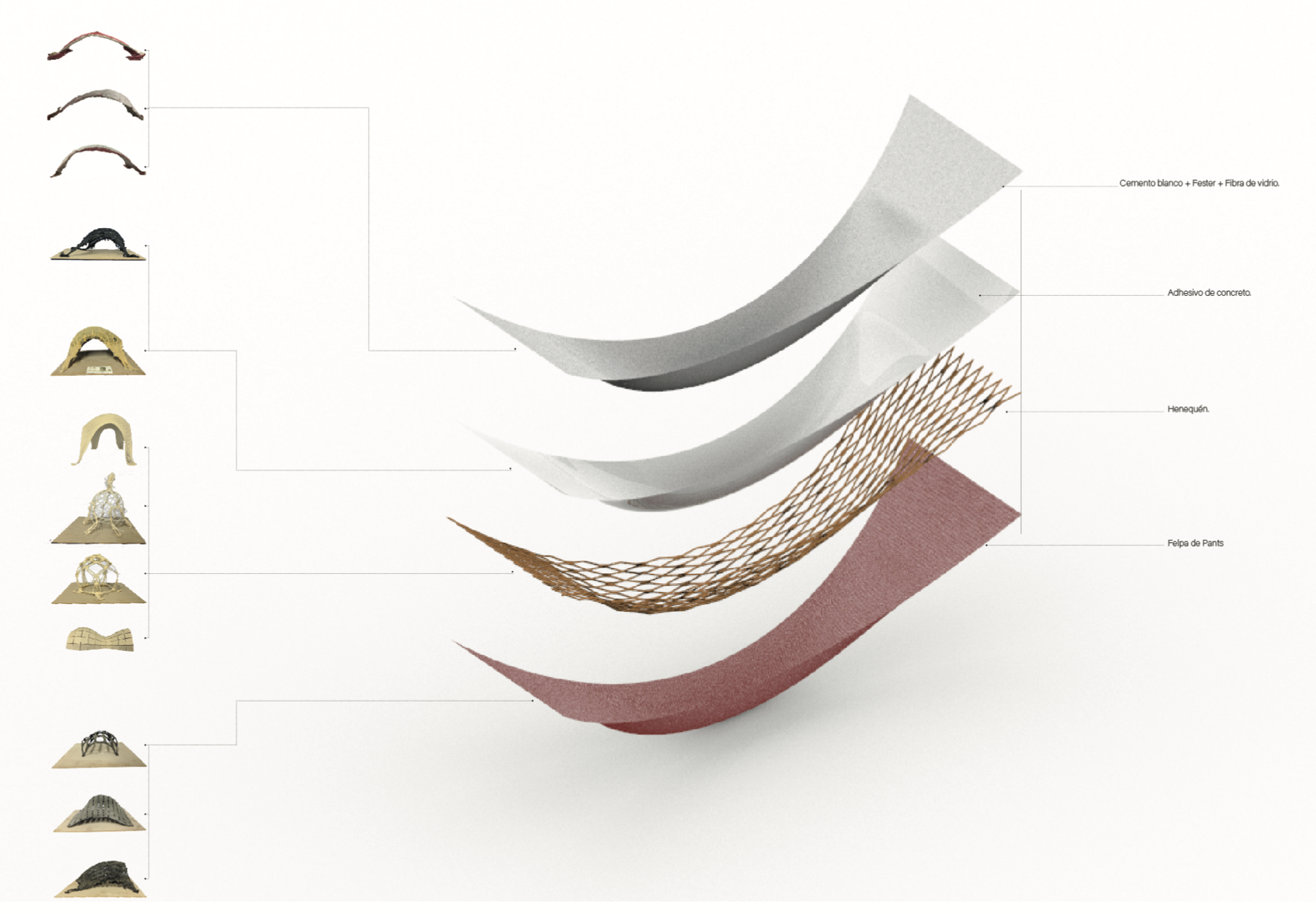
The research aimed to examine the behavior of selected structural typologies. The process began with double-curvature surfaces formed by shell structures, specifically self-supporting modular assemblies. Analysis of these forms, with the goal of achieving greater structural efficiency, opened further lines of inquiry: perforated structures and pneumatic structures.
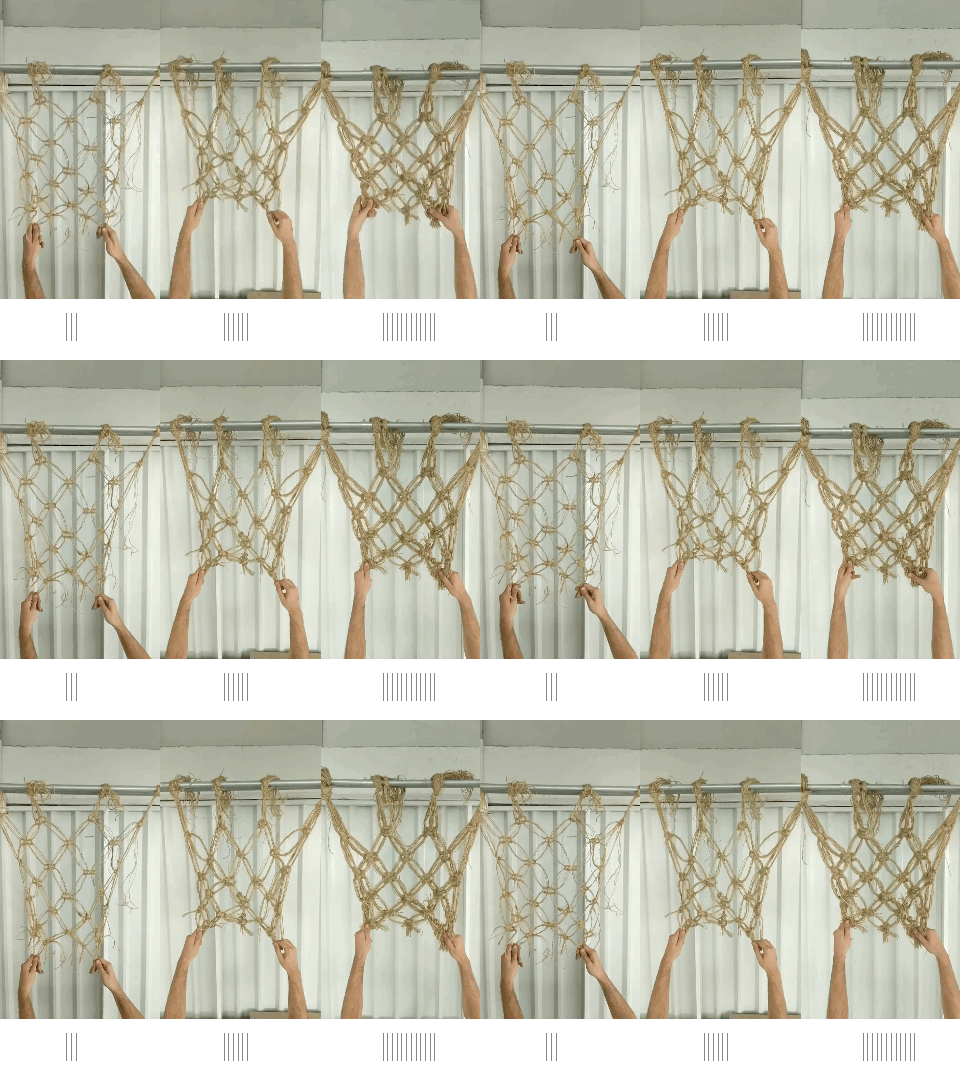
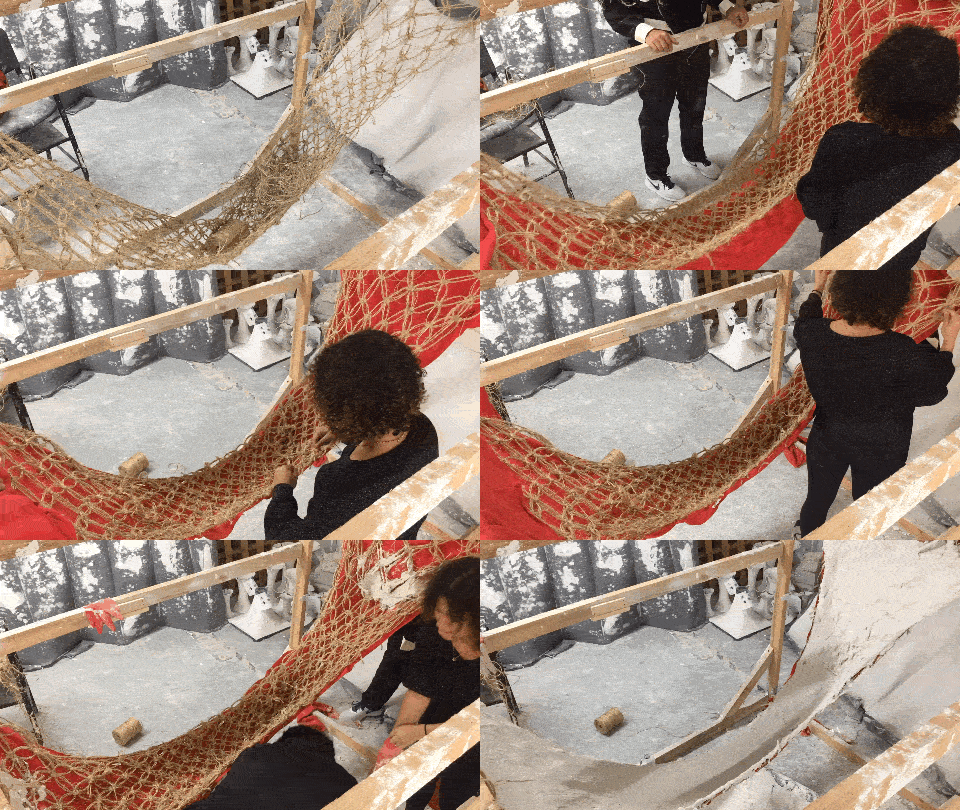
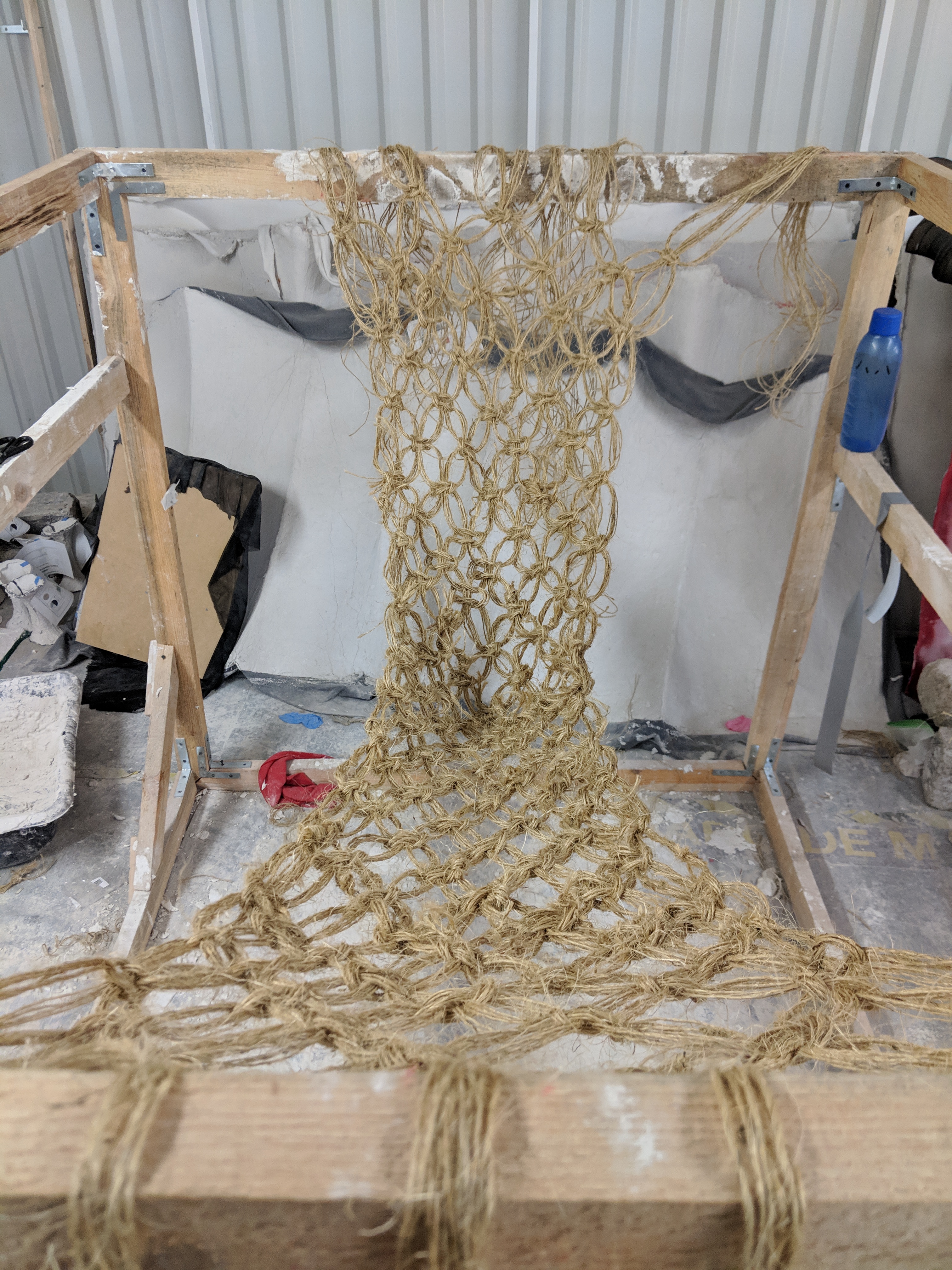
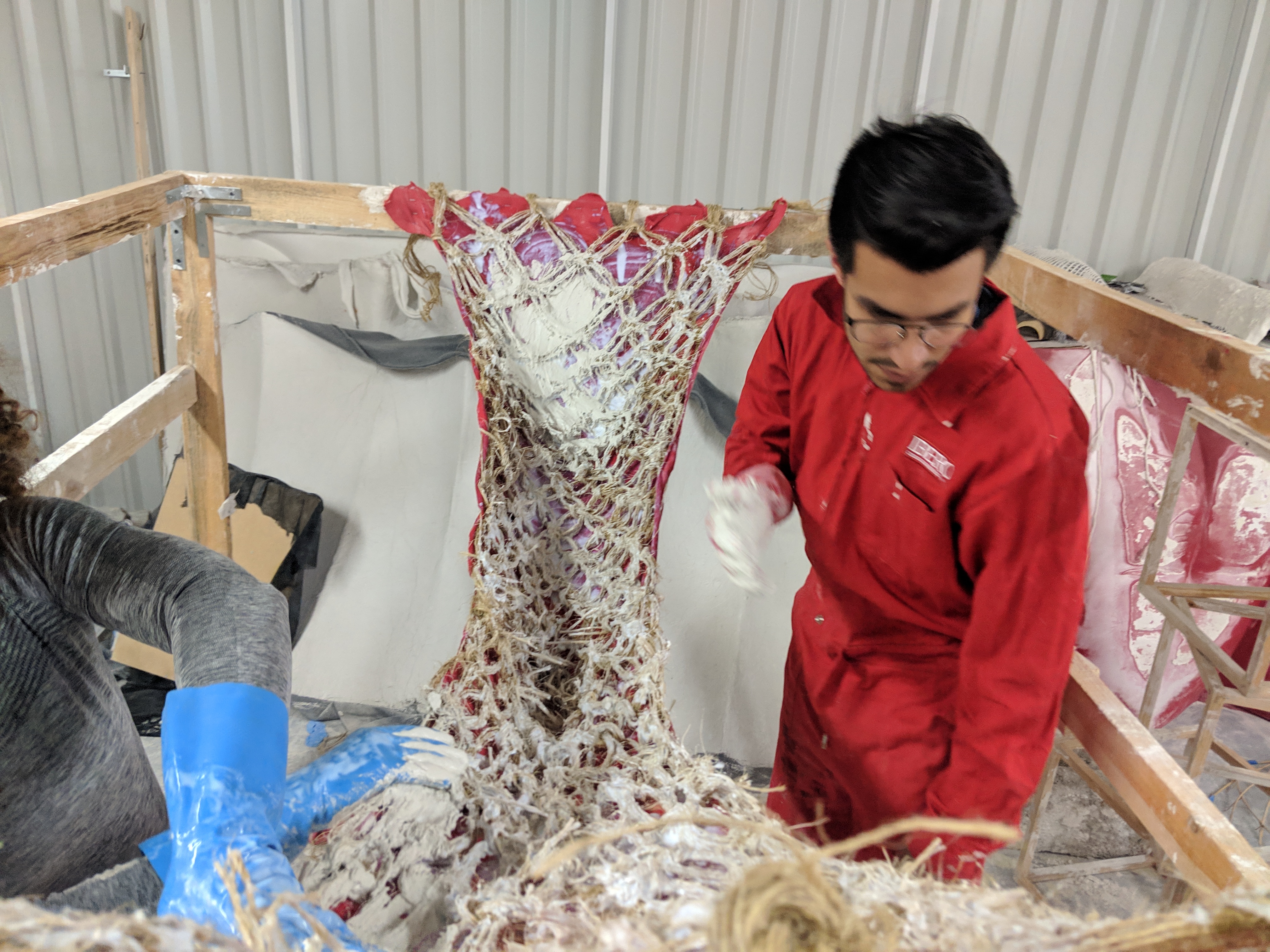
The final phase explored 2D geometries with the aim of scaling their structural properties. Applying form-finding principles, programmed weaving techniques were used to generate double-curvature surfaces and test their load-bearing capacity. The investigation shifted into macramé weaves using henequén fibers were programmed as part of the same aggregate logic. This exploration led to the final research line: programmed woven structures in catenary form, composed through an aggregate system combining fabric, henequén fibers, concrete, and additives.
Material testing
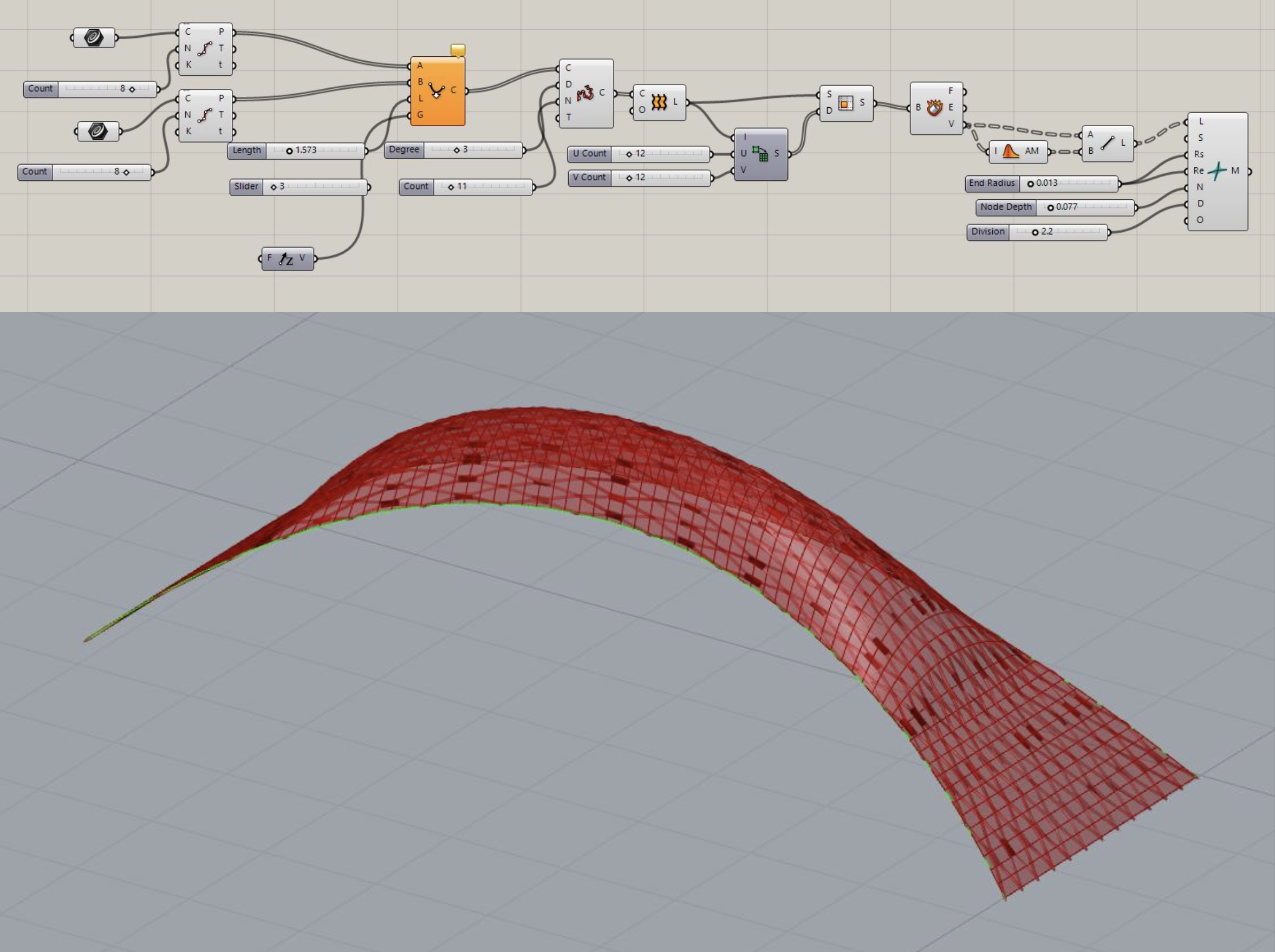
Definition
Final piece assembly from previous iterations
Final piece production
Stress resistance test
CATMcHn1.80x.80 A macramé catenary structure weighing under 15kg, load-tested to support eight people exceeding half a tonne combined weight.